
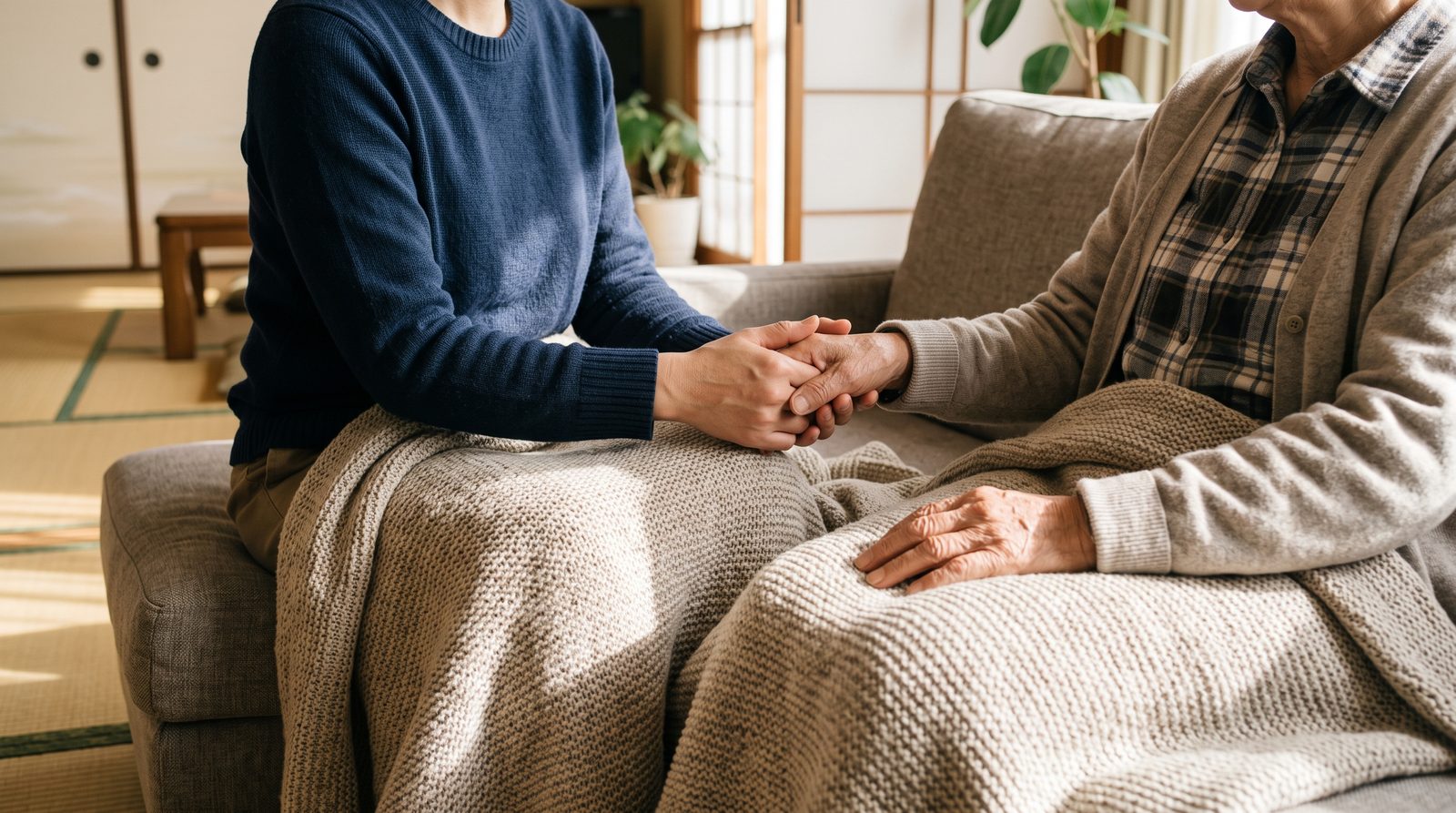
"My parents used to be so kind, but now they fly into a rage over the slightest thing." "They accused me of stealing their wallet, saying, 'You stole my wallet!' and made me search for it every day—I've had enough..."
When it comes to caring for someone with dementia, it is not “forgetfulness” itself that hurts family members the most and pushes them to their emotional limits.Drastic changes in emotions and behavior, such as “anger that makes a person seem like a different person” or “paranoia”It is.
When you’re busy with childcare and work, and you’re yelled at or accused of things for no good reason every day, it’s only natural that even the most loving family members would end up thinking, “I don’t even want to see their faces anymore.”
In this article, we’ll explain the reasons behind these changes caused by dementia and discuss the “medical approaches” you should turn to when “adjusting how family members interact” alone is no longer enough.
1. Why do people become “short-tempered” and “accuse others of theft”?
When someone develops dementia, the part of the brain responsible for memory shrinks, causing them to forget what happened “just a moment ago.” However, all that remains for the person is the realization that “something important is missing” and an overwhelming sense of anxiety about what to do next.
As a result of being unable to fully process that panic and anxiety on their own, they end up sending out an “SOS” in the form of the following symptoms (BPSD: behavioral and psychological symptoms) to the people closest to them—their caregivers (family members)—who are the ones they rely on the most.
- Delusion of Being Robbed: It’s a defense mechanism—because admitting “I forgot” is painful, we unconsciously convince ourselves that “you (who are closest to me) must have stolen it” in order to maintain our peace of mind.
- Irritability: It is a state in which the fear of being unable to understand one’s surroundings and the frustration of being unable to move as one wishes culminate in an outburst of “anger.”
These behaviors are caused by the illness—it is the illness that is making them speak or act this way—and do not mean that the parents’ true personalities have changed for the worse or that the family is providing poor care.
2. The Limits of “Agreeing Without Disagreeing”
When you look up information on caring for people with dementia, you’ll almost always find advice such as “Don’t contradict what the person says,” “Let’s look for it together,” and “Don’t get angry—try to distract them instead.”
Of course, these are the basics of professional care. However, family members who are constantly subjected to unreasonable remarks 24 hours a day, 365 days a year,It’s absolutely impossible to always smile and treat people like a Buddha.
"Even though I know better, I get frustrated and snap back. I hate myself for it." There’s no need to fall into self-loathing over this. There will inevitably come a point where relying solely on your family’s efforts and patience to get through it is no longer enough.
3. If you feel you’ve reached your limit, seek help from the medical system (medication and medical examinations)
If your symptoms are so severe that they cannot be resolved by adjusting how you handle the situation, please do not hesitate to seek medical help.
When treating dementia, doctors do more than just prescribe “medications to slow its progression.” They also take the following medical approaches to alleviate the delusions and anger that cause distress to family members.
- Fine-Tuning Medication: We carefully consider medications to reduce agitation and traditional Chinese herbal medicines to promote calm, tailoring them to the individual’s condition. Adjusting medication can sometimes help the individual feel more at ease.
- Treatment for Hidden "Physical Ailments": In fact, they may sometimes feel frustrated because they can’t put into words the physical distress they’re experiencing—such as “my stomach hurts because of constipation” or “I feel discomfort due to a urinary tract infection.” Sometimes, simply having a doctor examine them and address the problem can help them regain their peace of mind.
Some people feel guilty, thinking, “It’s so sad to make my parents take something like a tranquilizer,” but the person experiencing the panic attack is the one who is suffering the most and feeling the most anxious.Using the power of medicine to maintain peace of mind is an important part of treatment that helps preserve “smiles for both” the patient and their family.It is.
For specialized diagnosis and treatment, please visit the “Dementia Medical Center” at Uchida Hospital.
If you’re unsure where to turn for help or which medical department to visit, please start by contacting a specialized dementia care center.
Uchida Hospital operates a “Dementia Medical Center” designated by Gunma Prefecture and has established a specialized “Memory Clinic.”
A specialist in dementia will carefully listen to the patient’s symptoms and the family’s concerns, provide a thorough diagnosis, and make thoughtful, individualized adjustments to medication. Please feel free to consult with us even in the early stages, such as when you’re unsure whether symptoms are due to aging or dementia.
With the Taiseikai and Kunikai Groups, medical coordination is possible based on a patient’s “day-to-day condition.”
Adjusting medication to alleviate the symptoms of dementia is actually a very delicate process. To prevent side effects such as “the medication being too strong, causing the patient to sleep all day” or “unsteadiness leading to an increased risk of falling,”The doctor has a thorough understanding of “the patient’s daily life.”...will be essential.
At the Daiseikai and Kunikai Group, our long-term care services work in close collaboration with the medical care provided by Uchida Hospital.
"Lately, he's been getting irritable at the day care center." "His family is completely exhausted by his delusions at home."
These small "SOS" signals noticed by frontline social welfare staff,The group's strength lies in its ability to collaborate with doctors at Uchida HospitalIt’s not just a relationship where we meet briefly in the exam room once a month; we take your “day-to-day life” into account as we work to adjust your medication and offer advice in a way that minimizes your burden.
"Lately, my parent has been acting differently, and it's become difficult to care for them at home." Before you reach that breaking point, please consult with us first. Let's work together to ease the burden on your family by combining creative caregiving solutions (social services) with appropriate medical treatment (healthcare).
\ Please feel free to contact us if you have any problems /.
Medical Corporation Daiseikai, Uchida Hospital, Community Healthcare Coordination Office
(TEL) 0278-24-5329
Direct Line to the Gunma Prefecture Dementia Medical Center (located within Uchida Hospital)
(TEL) 0278-24-5359
Uchida Home Care Support Office
(TEL) 0278-23-7535
▶ Click here for the Daiseikai Group Uchida Hospital Outpatient Schedule