
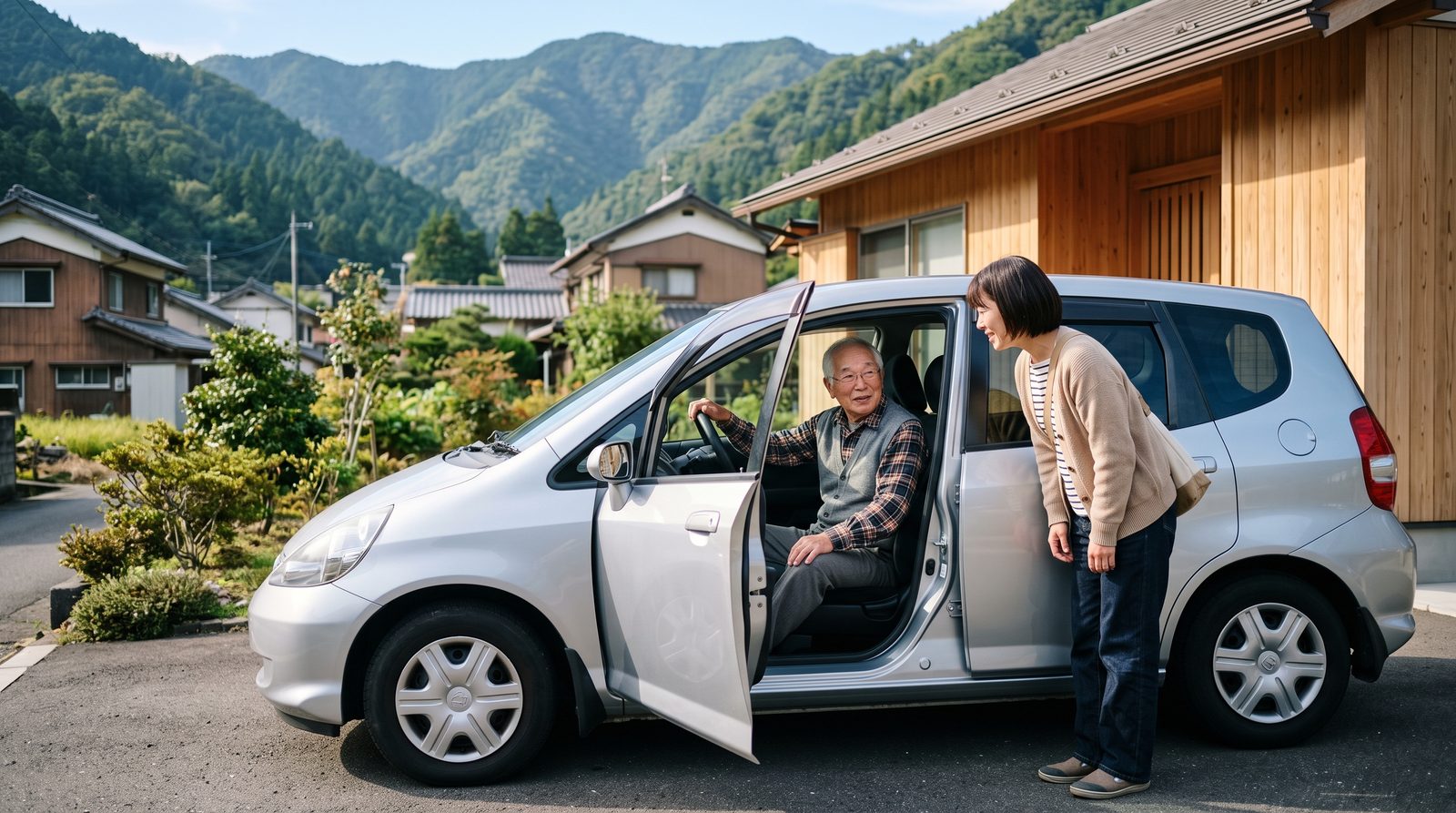
"Lately, I've been a little worried about my parents' driving..."
"There are more scratches on the car, but he says he's still fine."
"I want to encourage them to surrender their driver's license, but I don't know how to bring it up."
If you have elderly family members, you may have concerns like these about driving.
Cars are an essential means of transportation that support our daily lives—whether for shopping, medical appointments, work, or hobbies. Especially in areas where cars are indispensable, surrendering one’s driver’s license means more than simply “stopping driving”; it also means,An issue that has a major impact on one's life going forwardIt is.
So, when you start to worry about your elderly parents’ driving, how should you approach the situation?
1. It’s also important not to assume that “just because you’re older, you have to stop driving.”
As people age, changes may occur in their vision, reaction time, cognitive function, and physical abilities. However, it is not possible to make a blanket judgment—such as “It’s too dangerous to drive anymore” or “You should surrender your license”—based solely on age.
Important,Assess what changes are occurring in their current driving and consider them in light of the individual’s personal circumstances.Here’s an example. Let’s take a moment to look back and see if any of the following changes have occurred.
- It's started taking me longer to back into a garage and park.
- I've been scratching and bumping my car more often
- I sometimes miss traffic signals and signs
- I've been feeling more anxious about turning right or left and changing lanes.
- I started to worry about how to use the accelerator and brake
- Even on a familiar route, you can sometimes get lost.
- There have been more situations where I feel it's "dangerous" when my family is riding with me.
- He himself began to feel uneasy about driving
If you're concerned about these changes, rather than making a decision on your own as a family, one option is to consult a professional.
2. Assess Your Current Driving Ability Before Considering Surrendering Your License
Even if you think, “Maybe it’s about time to turn in your driver’s license,” it’s not an easy decision for the person involved. For someone who has been driving for many years, a car is not only a means of transportation but also an essential tool for managing their daily life.
Therefore, rather than immediately saying, “Let’s turn in your driver’s license,”First, have a professional evaluate your current driving ability, physical condition, and cognitive function, among other factors.is also important.
At Uchida Hospital, we offer services for older adults and individuals with MCI (mild cognitive impairment),"Driver Rehabilitation"We are currently offering this service. As part of our driver rehabilitation program, we provide the following support:
- Assessment and Training of Higher Brain Functions, Cognitive Functions, and Physical Functions
- Evaluation of driving skills using a driving simulator, and advice on driving
- Support to Help Those Who Can Continue to Drive Safely Keep Driving
- Guidance and assistance toward surrendering a driver’s license when it becomes difficult to continue driving, as well as psychological support regarding the surrender process
What's important is not to think, "I should stop driving because I'm getting older," but rather,Working together to plan for the future while keeping an eye on that person's conditionIt is.
3. Returning your driver's license isn't the "end goal"; you need to think about your life after that as well.
When people decide to surrender their driver's license, one thing that concerns many of them is"Life Going Forward"It is.
"How should I go shopping?"
"What about going to the hospital?"
"Will I no longer be able to go to the places I used to drive to?"
Especially in areas where cars are essential for daily life, it’s important to have a clear picture of what life will be like after you surrender your driver’s license. That’s why, when considering surrendering your license,We need to think together not only about whether you can continue driving, but also about what kind of life you’ll lead after you return your license.is important.
- How to Shop
- What mode of transportation do you use to get to your doctor's appointments?
- Is it necessary for a family member to provide transportation?
- Is it possible to use public transportation, etc.?
- Am I eligible for long-term care insurance services?
- Are there any new challenges you're facing in your daily life?
We'll take a holistic view of your entire lifestyle and consider various aspects, such as...
4. Connect individuals with the necessary support to ensure their daily lives continue uninterrupted even after returning the benefits
When it comes to life after surrendering your driver’s license, there’s no need to think, “We’ll just have to manage on our own as a family.” It’s important to use a consultation about driving as an opportunity to identify any difficulties you’re facing in daily life—such as shopping, going to medical appointments, or getting out and about—and then connect those issues to the appropriate support services.
Within our organization, including Uchida Hospital, there are professionals—such as counselors and care managers—who can provide consultation on caregiving, social welfare, and daily living. Even after we’ve conducted driving assessments and provided support through our driver rehabilitation program, we can connect you with counselors or care managers within our organization as needed to work together to identify services and support tailored to your specific situation.
It’s not just a matter of “asking for advice about driving and then calling it a day.”We don't stop at just driving—we make sure that person's daily life isn't disrupted.Whether you continue to drive or surrender your license, it is important to connect you with the necessary support so that you can live with peace of mind moving forward.
5. The goal is not to “get them to stop driving.”
If you’re worried about your elderly parent’s driving, you might feel tempted to say, “Please don’t drive anymore” or “Please turn in your license.” However, for them, driving may be more than just a means of transportation.
Going shopping. Going to the doctor. Visiting friends. Enjoying hobbies. Going out to places you like. Each of these individual actions contributes to a life that is true to who you are.
That is precisely why it is important not to think of it as simply a choice between continuing to drive and stopping, but rather,"How can we ensure that people can continue to live with peace of mind and be themselves?"That is the perspective.
- If you feel anxious about driving, try consulting a professional first.
- On top of that, I’ll consider surrendering my driver’s license if necessary.
- We’ll also connect you with people and services you can turn to for advice on your life moving forward.
By addressing each concern and connecting it to the next step in support, we can create an environment where people can live with peace of mind even after surrendering their driver’s license.
6. If you're concerned about your elderly parents' driving, talk to them first
"Lately, I've started to worry a little about my driving."
"I'm not sure if I should consider turning in my driver's license."
"I'm worried about what my life will be like after I return it."
In such cases, rather than trying to reach a conclusion just among family members, why not consult a professional?
At Uchida Hospital, we provide driver rehabilitation services that include driving assessments and training, as well as support for continuing to drive or surrendering a driver’s license. Additionally, as needed, we collaborate with in-house counselors and care managers to ensure that patients receive the necessary support not only for driving but also for their daily lives moving forward.
Whether to continue driving or to surrender one’s license, each is an option for maintaining a lifestyle that suits the individual.When you find yourself thinking, “I’m worried about my parents’ driving,” why not use that as an opportunity to think about your future?
\ Please feel free to contact us if you have any problems /.
Medical Corporation Daiseikai, Uchida Hospital, Community Healthcare Coordination Office
(TEL) 0278-24-5329
Uchida Home Care Support Office
(TEL) 0278-23-7535
▶ Click here for details on the Rehabilitation Department (Driver Rehabilitation) at Uchida Hospital