
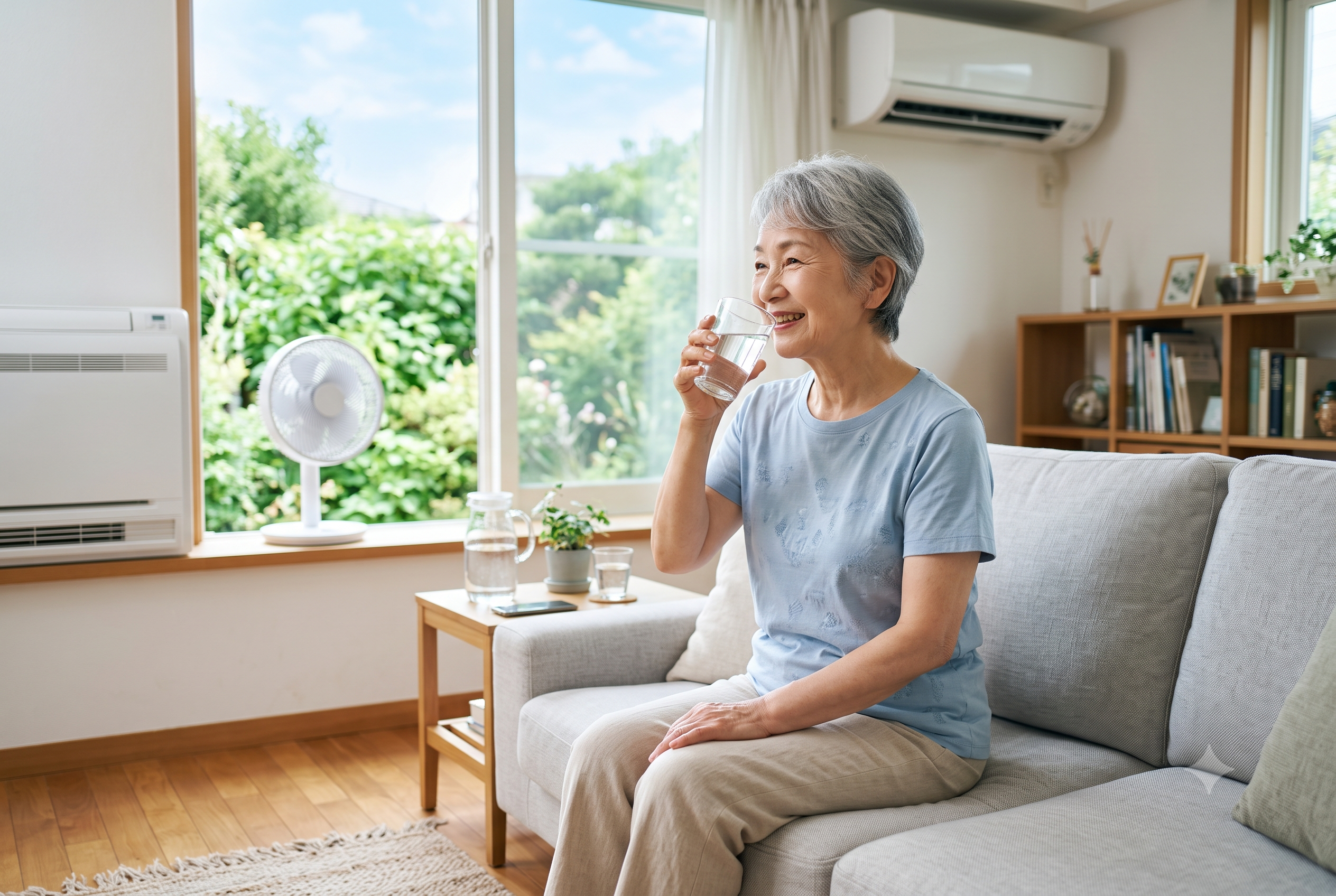
"My parents don't seem to turn on the air conditioner, even when it's hot..."
"I'm worried about whether my parents, who live far away, are staying healthy this summer."
The season when the lush greenery of the Tone-Numata region is at its most dazzling has arrived. However, in recent years, intense heat has persisted nationwide during the summer. There was a time when people used to say, “Numata is cool, so we’ll be fine,” but nowadays, it’s not uncommon for the high to far exceed 30 degrees.
For older adults and people with disabilities in particular, the summer heat places a greater physical strain on the body than we might imagine. In this article, we’ll discuss how to stay healthy as we head into the height of summer."Heatstroke Prevention"And, supporting that"Long-Term Care and Home Care Services"I'll explain how to use it.
1. Why are older adults more susceptible to heatstroke?
“I’m fine,” “I’m not thirsty”—we often hear phrases like these, but in fact, there are “three signs” hidden in the bodies of older adults that indicate they are at risk of heatstroke.
- You'll be less sensitive to the heat
As we age, the brain’s temperature sensors become less responsive. Even when the room temperature rises, it takes longer to feel “hot,” which can cause us to miss the right time to turn on the air conditioner. - My body's water content has decreased
The human body stores a large amount of water in its muscles. As muscle mass decreases with age, the body’s reserve supply of water also decreases. - It's hard to notice when you're thirsty
It’s said that by the time you feel “thirsty,” dehydration has already begun. If you don’t make a habit of consciously staying hydrated, your body can become completely parched before you even realize it.
In addition to these factors, in mountainous areas such as those around Numata City, where mornings and evenings tend to be cool, people sometimes become overconfident, thinking, “It’ll be fine if I just leave the windows open during the day,” and end up unable to cope with sudden rises in temperature.
2. Start Today! Heatstroke Prevention Tips for Everyday Life
First, let’s review some basic precautions you can take at home.
- Stay Hydrated “Before You Get Thirsty”
In addition to mealtimes, try to drink a glass of water at set times, such as when you wake up, before and after bathing, and before bed. - Using Your Air Conditioner Wisely
People often think, “It’s a waste of electricity,” but saving lives is the top priority. Try using a fan at the same time or setting the temperature to around 28 degrees to keep the room from getting too hot. - Preventing Summer Fatigue Through Diet
Summer vegetables (such as cucumbers, tomatoes, and eggplants) are rich in water and minerals. Although this is a time when your appetite tends to wane, try to get your nutrients from foods that go down easily.
3. Time spent alone can be a source of “anxiety” for families as well
Even though we know it’s important to take precautions against heatstroke, it’s very difficult for family members to stay by a loved one’s side all day long when they have work and household chores to attend to.
"What if I get sick while I'm home alone during the day...?"
To alleviate such concerns for families and ensure the individual’s health,Protection Through a Professional's EyeThat is our home care and in-home services.
4. Enjoy a “Cool, Fun, and Safe Summer” by Taking Advantage of Our Services
Since this is the time of year when heatstroke is a concern, we highly recommend that you consider the following services.
- "Cool Social Gatherings" at Day Care Centers (Day Care Services)
Day care is a service where participants commute from their homes to the facility to enjoy meals, bathing, recreational activities, and more.
• Advantages: The facility is always kept at a comfortable temperature, so you can stay cool and comfortable all day long. In addition, our staff regularly encourages you to stay hydrated and constantly monitors your complexion and physical condition.
• Things to Look Forward To: Bathing, recreational activities, and conversations with friends can be a great source of stimulation for people who tend to stay cooped up at home. - "Peace of Mind at Home" Through In-Home Care and In-Home Nursing Services
For those who wish to continue living in the home they’re accustomed to, our staff will visit regularly.
• Advantages: We check your living environment—such as whether the room temperature is appropriate and whether there are drinks in the refrigerator. Additionally, when a nurse visits, they monitor your blood pressure and pulse to quickly detect any changes in your condition and ensure they don’t miss any signs of dehydration. - Employment Support and Daily Living Support (For People with Disabilities)
At the services for people with disabilities operated by the Kuni Association, we take the utmost care with summer activities. Even for those who find it difficult to verbally express how they’re feeling, our experienced staff are there to provide support, ensuring they can participate at a comfortable pace. Establishing a routine of “going outside” also helps build the stamina needed to fight off summer fatigue.
5. “Consult Early” for a Summer Full of Smiles
We at the Daiseikai Group have long valued the collaboration between medical care and long-term care in the Numata and Tone regions. Even during the hot summer months, if you have any concerns about your health, we have a system in place so you can consult with us right away. If you haven’t yet received a long-term care certification but are worried just for the summer, please start by telling us about your current situation.
\It’s okay to start with “I think I’ll ask for some advice.”/
To help you get through the hot summer with peace of mind. If you feel even the slightest bit of concern, please don’t keep it to yourself—talk to us first.
- Proposing plans tailored to the individual's lifestyle
- Information on Day Service Tours and Trial Sessions
- Feel free to contact us to discuss flexible usage options, such as “just for the summer.”
That step is the first step toward a healthy daily life.
Consultations regarding long-term care, day service enrollment, etc.
▶ Taiseikai Group Long-Term Care Services Details
Consultations on welfare for people with disabilities, employment support, and more
▶ Kuninkai Services for the Disabled Details here