"He was fine just yesterday, but this morning he suddenly said he couldn't move his arms and legs."
"Lately, when I wake up in the morning, I feel lightheaded and like I'm going to fall over."
As autumn deepens and the temperature difference between morning, evening, and daytime grows larger during this time of year, the bodies of older adults are under significant, though unseen, strain.
One thing to watch out for in particular is “blood pressure spikes,” in which blood pressure fluctuates wildly due to sudden changes in temperature.And, as a result of that..."Cerebrovascular diseases (cerebral infarction and cerebral hemorrhage)."
In this article, we’ll explain the risks that autumn’s temperature fluctuations pose to the health of older adults, preventive measures you can take at home, and key points families should know in case of an emergency.
1. Why Do "Autumn Temperature Swings" Pose a Threat to the Health of Older Adults?
As people age, the function of the autonomic nervous system—which regulates body temperature and blood pressure—gradually declines. As a result, the body becomes less able to adapt to sudden changes in temperature.
The following two problems tend to become more common, especially in early fall.
① A “blood pressure spike” caused by a sudden constriction of blood vessels
The moment you step out of a warm room into a cold hallway, bathroom, or changing room, the sudden chill causes your blood vessels to constrict sharply, causing your blood pressure to spike. This is known as a “blood pressure spike” (a sudden fluctuation in blood pressure; medically referred to as a “blood pressure surge”). A sudden rise in blood pressure increases the risk of a rupture in a blood vessel in the brain (cerebral hemorrhage). Conversely, when you return to a heated room, your blood pressure drops rapidly, and the lack of blood flow to the brain can cause “dizziness upon standing or falls.”
② “Thick, sticky blood (cerebral infarction)” caused by reduced fluid intake
Once summer is over and the weather cools down, we tend to feel less thirsty and drink less water. However, because the air is dry in the fall, our bodies lose moisture without us even realizing it. When we become dehydrated, our blood becomes thick and sticky, which drastically increases the risk of a “cerebral infarction,” a condition in which blood vessels in the brain become blocked.
2. Three Preventive Measures You Can Take at Home to Avoid “Fall Illnesses”
A little thoughtfulness from your family can help reduce the risk of health problems caused by temperature fluctuations.
- Eliminating "Temperature Differences" Between Rooms
In addition to the living room, place small heaters in areas such as the “bathroom,” “changing room,” and “hallway”—which you use early in the morning or at night—to reduce temperature differences throughout the house (which can cause heat shock). - Regular Hydration "Before You Get Thirsty"
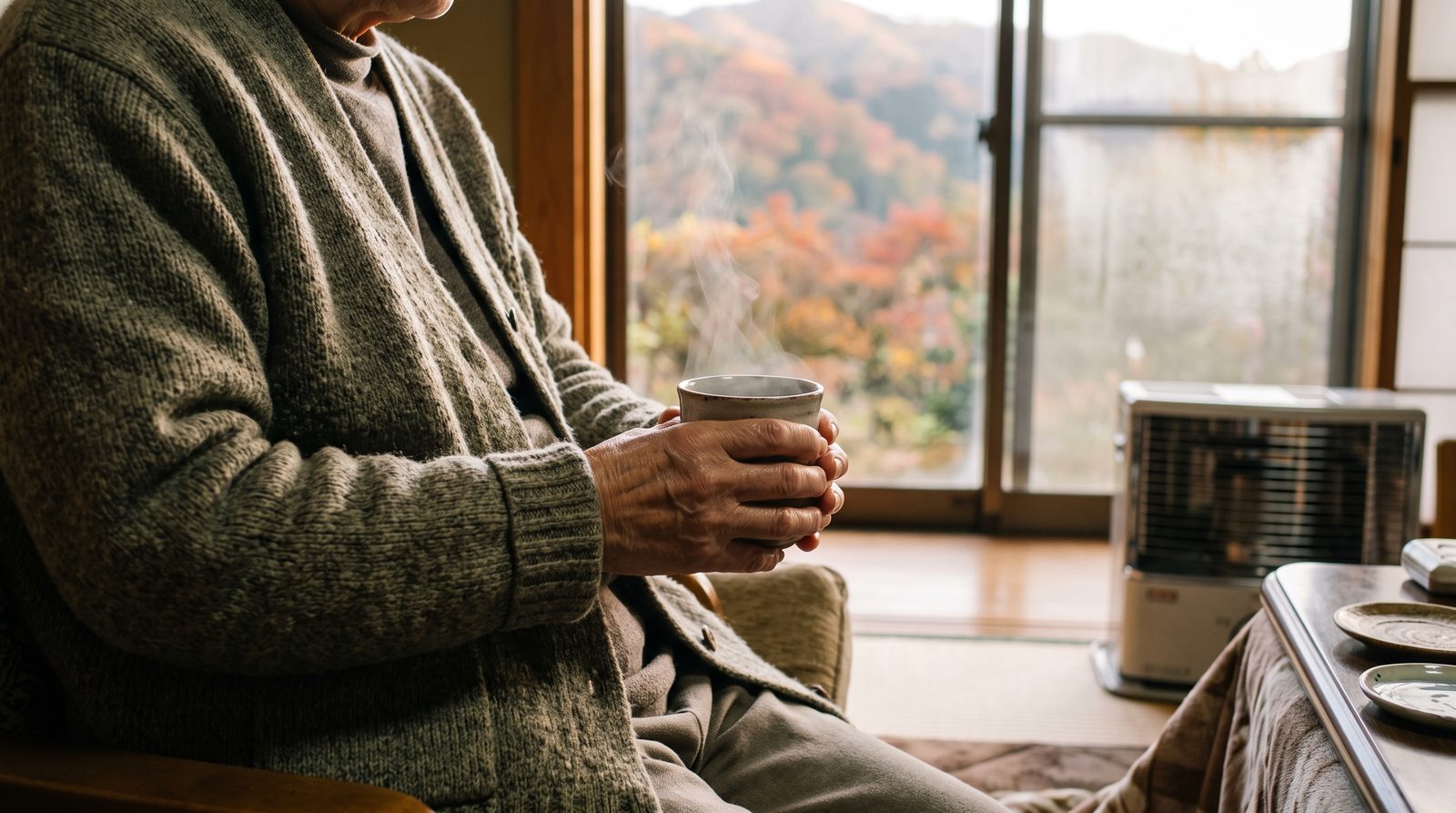
Thinking, “It’s cold, so I don’t need to drink anything,” is dangerous. Get into the habit of drinking warm tea or plain hot water at set times—such as when you wake up in the morning, before and after a bath, and before bed. - "Get up slowly in the morning."
If you stand up suddenly from your futon, the sudden change in blood pressure may cause you to feel dizzy and increase the risk of falling. Encourage them to follow these steps: “Move your arms and legs in a clenching and unclenching motion while still in the futon” → “Slowly sit up and sit on the edge of the bed” → “Place your feet firmly on the floor and stand up.”
3. “Don’t Miss It!” The FAST Rule for Suspected Stroke
If a family member exhibits even one of the following symptoms, do not assume it is “just fatigue or a case of the autumn blues”; seek medical attention immediately. It could be a sign of a stroke.
- F (Face): One side of my face droops, making it hard to smile, and water spills out of my mouth.
- A (Arm): When I extend both arms forward, only one of them drops down.
- S (Speech): Slurred speech; unable to come up with simple words or understand them
- T (Time): If you notice any symptoms,Check the time right away and call an ambulance (contact a medical facility)!
"Health Management Made Possible by a Nursing Perspective and Medical Collaboration" by the Taiseikai and Kunikai Group
There are limits to what families can do on their own to monitor changes in a person’s health caused by the temperature fluctuations of fall. To avoid feeling anxious—thinking, “Something seems off when they come home from day care…”—it is crucial to consider whether a care service has a medical support system in place when selecting one.
At the welfare services (day services, short-term stays, and various facilities) operated by the Daiseikai and Kunikai Group, we pay close attention to any changes in our clients’ health and keep a watchful eye on them, especially during this season of extreme temperature fluctuations.
- Daily vital sign checks by nursing staff:
Nurses monitor blood pressure fluctuations, body temperature, and skin dryness (indicating a tendency toward dehydration) on a daily basis, striving to quickly notice even minor changes, such as “blood pressure is slightly higher than usual” or “behavior or speech seems a little off.” - Medical Collaboration with Uchida Hospital:
If your pet shows signs of illness or symptoms suggestive of a cerebrovascular disorder while in our care,We will coordinate our response in collaboration with Uchida Hospital, which is part of the same group.
"I have high blood pressure, a chronic condition, and I'm worried about receiving home care from fall through winter." "In case of an emergency, I want to place my loved one in a facility that can immediately connect them with medical care."
If this sounds like your situation, please feel free to consult with Kunikai’s welfare services. We support your family’s daily life through a two-pronged approach: daily living support (welfare) and coordination with medical care to prepare for sudden changes in health.
\ Please feel free to contact us if you have any problems /.
Medical Corporation Daiseikai, Uchida Hospital, Community Healthcare Coordination Office
(TEL) 0278-24-5329
Uchida Home Care Support Office
(TEL) 0278-23-7535