
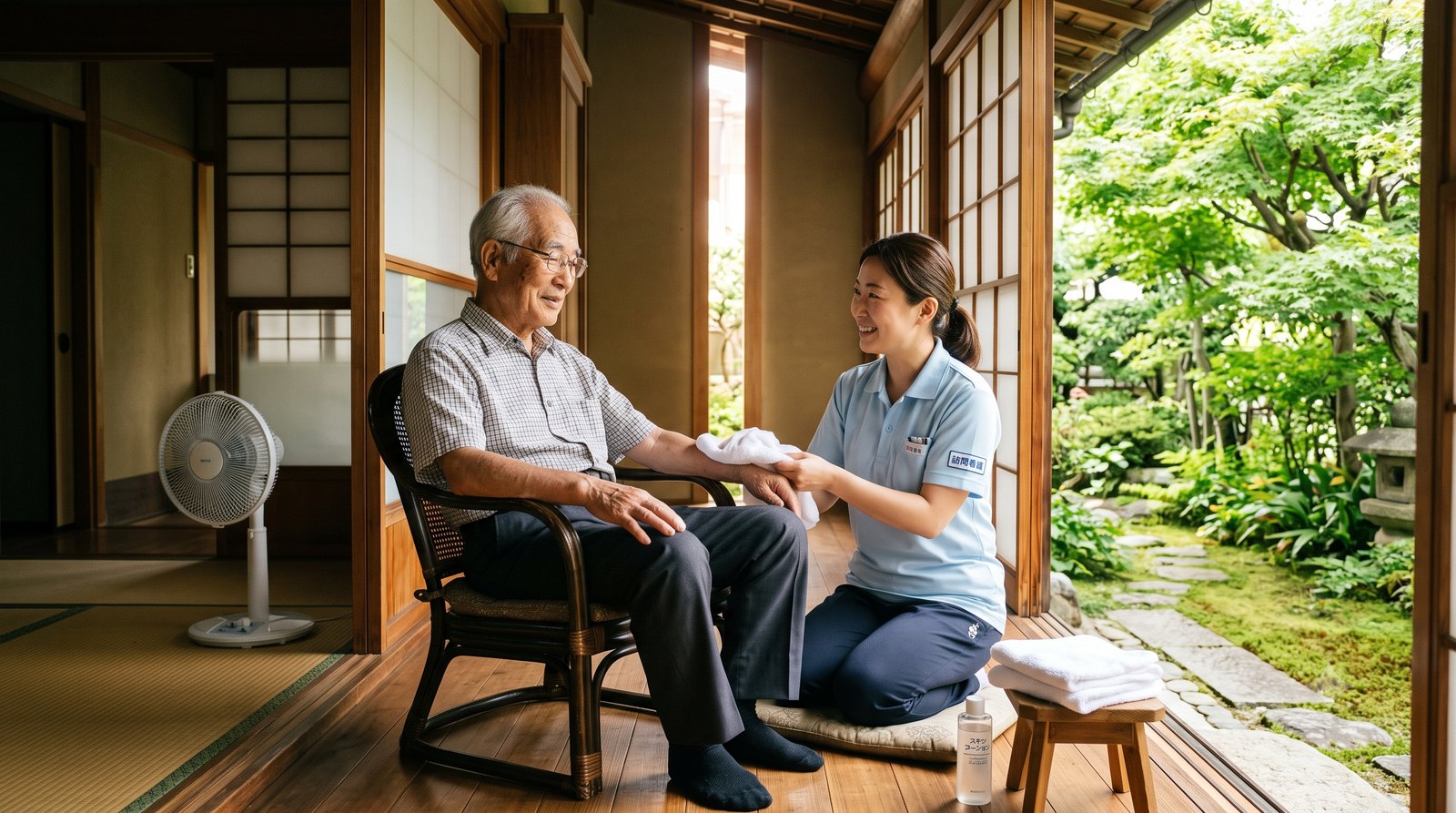
Summer, with its high temperatures and humidity, is a particularly harsh season for the skin. This is especially true for people who require caregiving, as they may have difficulty wiping away sweat on their own, and their diapers can easily become damp and stuffy,The risk of skin problems increases significantly.
If you let your guard down, thinking, “It’s just heat rash,” bacteria can enter the skin through the rash and lead to dermatitis or an infection. To get straight to the point of this article, there are only two important things to remember."Preventing Problems Before They Happen"And,"Observation That Doesn't Miss Even the Slightest Change"Here, I’ll explain the basics of hygiene care that we practice every day in the field of long-term care.
1. Why Do Skin Problems Increase in the Summer for People Receiving Long-Term Care?
Compared to when they were younger, older adults’ skin is thinner, more prone to dryness, and more sensitive to irritants. On top of that, there are additional factors unique to summer.
- Can't wipe the sweat off on my own
The longer you lie down, the more sweat builds up on your back and the back of your neck. - The inside of the diaper becomes hot and humid
Body heat and moisture cause the skin to become soft and supple, making it more vulnerable to even the slightest friction. - Sometimes I can't say "I'm itchy"
Since the person themselves cannot speak up, the eyes of their family and staff become their only “sensors.”
2. Three Golden Rules of “Hygiene Care” Followed by Care Professionals
On-site, we place great importance on the following three steps. The order in which they appear is also significant.
- Wash “gently, without rubbing”
If you have sensitive skin, simply scrubbing with a towel can cause irritation. Lather the soap well, and use your hands or a soft gauze pad to gently “wipe away” sweat and dirt. To remove dirt,The Power of Bubbles...not the force of rubbing. - Thoroughly Remove "Moisture"
After bathing, gently pat dry the areas where skin folds together (under the arms, around the neck, and around the diaper area) with an absorbent towel.Even if you think your skin feels “dry,” moisture tends to linger in the creases of your skin.So please be careful. - "Protect" and Safeguard
If your skin is dry, apply a moisturizer; conversely, apply a thin layer of petroleum jelly or similar product to areas you want to protect from irritation. Think of this care as creating a barrier on the surface of your skin.
3. “Is This Just Heat Rash?” Signs You Shouldn’t Overlook
If you're unsure about what to do as part of your daily care routine, please use the following table as a guide.
| Things It's Okay to Wait and See About | Signs That Indicate You Should See a Doctor |
|---|---|
| Small red bumps are appearing only on the areas where I've been sweating. | The redness has spread, and there's some discharge. |
| If you clean it and let it dry, the stain will fade by the next day. | Scratching repeatedly (the person shows signs of doing so) |
| He doesn't seem to be bothered by it. | Even after a few days, there's no sign of it getting better. |
For the symptoms listed on the right, rather than just waiting to see how things go with over-the-counter medication,The best course of action is to see a specialist as soon as possible.That's right. When it comes to skin issues, seeing a specialist is ultimately the quickest way to get help.
4. Ensuring Peace of Mind Through Collaboration Between “Medical Care” and “Long-Term Care”
In our group, on-site care staff and home-visit nurses check the condition of residents’ skin, and if they notice anything that seems “a little off,” they immediately coordinate with medical facilities within the group. If you’re having any skin-related concerns, please feel free toDermatology Department at Uchida HospitalPlease make use of it.
- Proper Diagnosis by a Specialist
We accurately identify the cause of your skin problems and prescribe the topical medication best suited to your current skin condition. - Handover from a Care Professional
Because our staff shares information about “the environment in which care is provided” and “daily routines,” dermatologists can conduct examinations with a full understanding of the patient’s background.
"Is this serious enough to go to the hospital...?"
There’s no need to hesitate. If left untreated, skin problems in older adults can cause pain and itching that keep them awake at night, significantly reducing their quality of life (QOL)."Get it checked out while it's still minor"That is the gentlest option for your body.
5. Enjoy a Refreshing Summer with Good Hygiene
Keeping your skin clean is the first step toward maintaining your overall health and enjoying a sense of calm. If you’re providing care at home and are worried about things like “I don’t know how to keep their skin clean” or “their skin gets irritated easily,” please feel free to contact us.
Advice from a long-term care perspective, combined with professional medical support. We’re committed to doing everything we can from both of these angles to help your family enjoy a happy summer.
\ If you have any questions about your skin, please feel free to contact us first /
- Advice on how to maintain good hygiene at home
- Consultations on Home Nursing and Home Care Services
- If necessary, we will refer you to the Dermatology Department at Uchida Hospital.
Medical Corporation Daiseikai, Uchida Hospital, Community Healthcare Coordination Office
(TEL) 0278-24-5329
▶ Click here to inquire about the Daiseikai Group’s home nursing and home care services