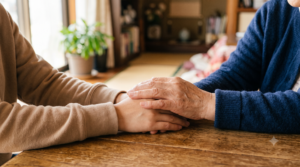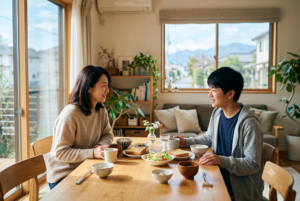

"As long as we're healthy, we can take care of this child at home, but what will happen to her when we get older and can't move around anymore…?"
"I don't want to be a burden on my siblings. But I can't imagine this child living on their own."
"I keep putting it off, thinking it's still a long way off, but every now and then, I'm suddenly overcome with intense anxiety."
For parents raising children with disabilities or developmental differences, the anxieties about “what will happen after we’re gone” and “future housing” become an increasingly heavy burden as their children grow older.
If a parent is suddenly hospitalized due to illness or injury, or if they reach an age where they require long-term care, the lack of any preparations can lead to significant confusion for both the parent and the family.
In this article, we’ll explain “key considerations for future housing (such as group homes and residential care facilities)” and “essential medical checkpoints to consider when choosing a home”—information you’ll want to know to protect the future of both the individual and their family.
1. Why “After Parents Have Reached Their Limit” Is Too Late
There are quite a few families who put off considering housing options, saying things like, “We can still live at home,” or “The person doesn’t want to leave home.”
However, if you wait until your parent has fallen ill to frantically start looking for a place to care for them, you may face the following harsh reality:
- Panic and Deterioration in Physical Health Due to Changes in the Environment: For people who are particular about certain things or sensitive to changes in their environment, being suddenly placed in an unfamiliar setting can be extremely stressful and may lead to physical and mental health issues.
- Unable to move into the desired home right away: Local group homes and residential care facilities have limited capacity, and it is often difficult to find immediate openings for people who require medical care or intensive support.
That's why,Get used to spending time in places other than your parents' home, little by little, while your parents are still healthy.However, it is a sign of deep affection for the person and the first step toward peace of mind.
2. Three Key Points to Consider When Choosing a Future Living Arrangement (Such as a Group Home)
When choosing a living arrangement—such as a group home (shared living support) or a facility for people with disabilities—where the individual can continue to live with peace of mind, be sure to check the following three points.
① Healthcare System for “When You Grow Older or When a Chronic Condition Worsens”
Just like their parents, they, too, will grow older. In the future, when they develop lifestyle-related diseases such as high blood pressure or diabetes, have to take more medication, or experience a decline in physical function,Whether medical support is available, and whether they collaborate with primary care physicians or hospitalsThis is a very important point.
② “Emergency Response” in the Event of a Sudden Illness or Panic Attack
In the event of a fever or injury at night, or if someone becomes emotionally unstable and has a panic attack, make sure there is a system in place to refer them to a medical facility or specialized care, rather than having on-site staff handle the situation alone.
③ Connection to daytime activities (daily living support, employment, etc.)
When there is coordination not only with housing (nighttime living) but also with daytime programs—such as “daily living support” and employment assistance—where individuals can participate with peace of mind, their daily routines become more stable, leading to a greater sense of purpose and more smiles.
3. Let's start with "short-stay practice"
"Moving into a group home right away is just too big a hurdle for both the person and their parents..."
It's only natural to feel that way. First of all,Short-term stays (short-term admission) once or twice a monthI recommend starting with that.
- Benefits for the individual: With the reassurance that “even though I’m staying away from my parents, I’ll definitely be able to go home again,” children can gradually practice getting used to staff members other than their parents and to a different environment.
- Benefits for Parents: Leaving things to the professionals not only gives you a chance to rest both physically and mentally (respite), but also allows you to build a relationship of trust with the staff, knowing that “I can count on them.”
Through “collaboration with the medical community,” the Daiseikai Group is committed to supporting individuals throughout their lives.
"My child has a chronic condition and takes medication—will the group home accept him or her?"
"I'm looking for a place that will support me and not abandon me, even if I have my quirks or panic attacks."
To respond to the heartfelt wishes of such families, we at the Daiseikai-Kunikai Group are committed to providing support that integrates medical care and social welfare.
- We collaborate with “Medical Services (Uchida Hospital)”: The group homes, short-stay facilities (Viva Vivo), and daily living support services operated by the Kuni Association collaborate with Uchida Hospital (which offers pediatric care, among other services), which is part of the same group. We can consult with medical professionals regarding pre-existing conditions, medication, and changes in health that occur with age.
- A long journey of support that lasts from childhood through to “after the parents are gone”: You can progress step by step at your own pace, starting with child development support and after-school day services, moving on to “daily living support” during the day, “short-term stays” as practice for overnight stays, and eventually to a “group home.”
Please don't keep the worry—"What will happen to this child if I'm no longer here?"—to yourself.
Even if you aren’t yet considering moving in, we welcome inquiries from those who simply want to “take a tour first” or “learn more for the future.” Why not start preparing together, step by step, starting today, to ensure your peace of mind in the future?
▶ Click here for information on the "Viva Vivo" Group Home and Short-Stay Facility
▶ Click here for a list of Kunikai's disability welfare services
▶ To sign up for a tour or a one-on-one consultation, please visit the "Contact Us" page.
\ Please feel free to contact us if you have any problems /.
Medical Corporation Daiseikai, Uchida Hospital, Community Healthcare Coordination Office
(TEL) 0278-24-5329
Disability Support Center for Everyone
Specialists provide free consultation and service utilization planning regarding welfare of persons with disabilities.
TEL:0278-25-8311
Mail:minnanotameno@kyujinkai.com