When you hear the word "dehydration," you may have a strong image of summer.
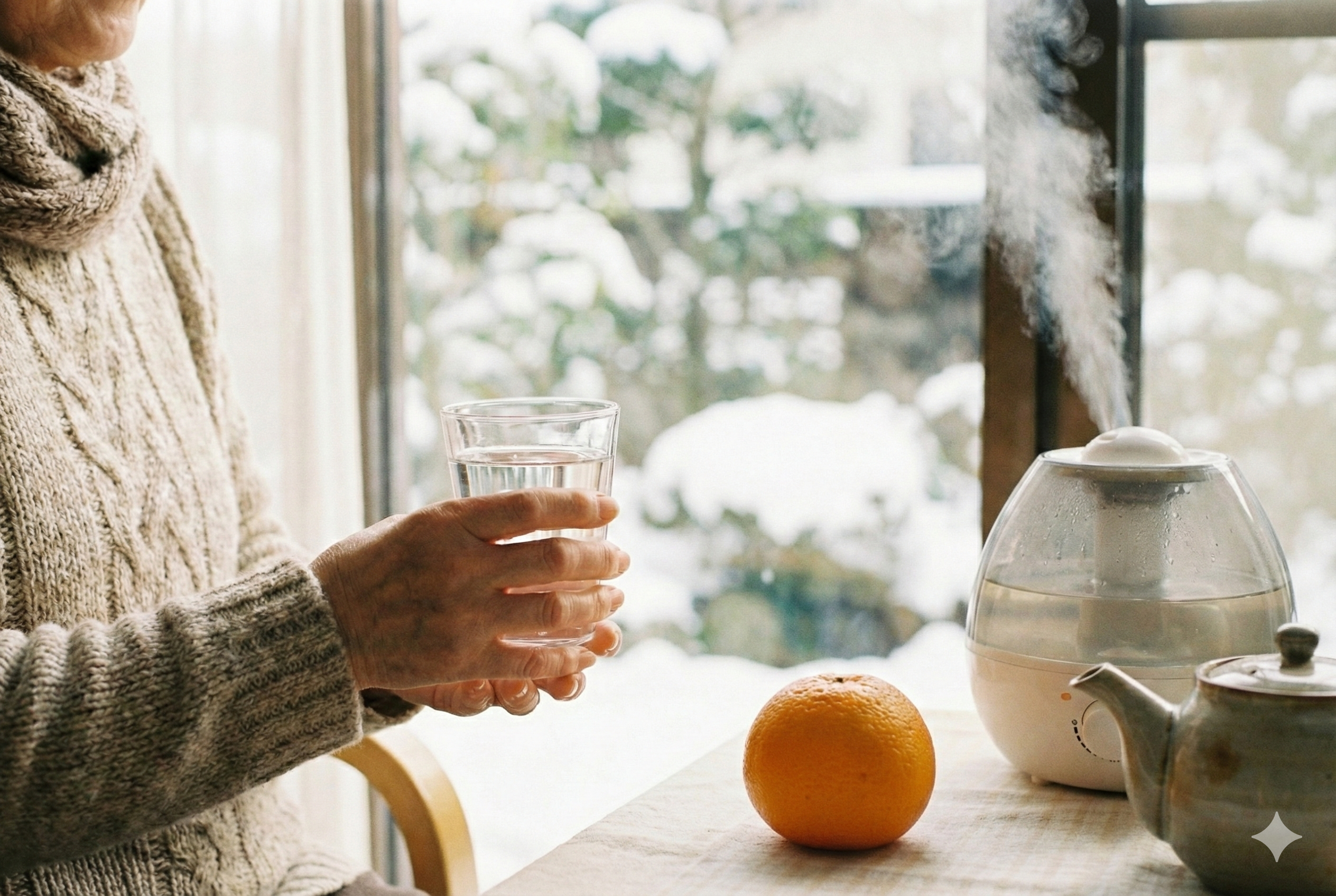
But actually,Winter is another season when the elderly are prone to dehydrationIt is.
The combination of dryness from heating, decreased fluid intake due to cold weather, and changes in body sensation can lead to dehydration without notice.
Early recognition and prevention are important, as severe cases can lead to worsening of the condition and hospitalization.
In this article,Signs of dehydration in the elderly and ways to prevent it at homewill be explained in an easy-to-understand manner.
Why is dehydration more likely in winter?
In winter, there are fewer opportunities to sweat, making it difficult to be aware that one is not getting enough water.
Furthermore, in the case of the elderly,
- Less thirsty
- Cut back on fluids because of concern for the toilet
- Heating dries out the room.
This is the reason why they are more likely to suffer from water deficiency.
Signs of dehydration common in the elderly
The following changes should be noted
(1) Dry mouth and chapped lips
If the mouth is sticky or lips are cracked, there may be a lack of moisture.
(2) Loss of skin tautness
Pinch the back of your hand lightly and when you let goslow to returnIf this is the case, it is a sign of dehydration.
(iii) Low volume and dark color of urine
Dark yellow to brown urine indicates water deficiency.
(4) Dimness and lack of energy
Dehydration may cause blurred vision and slowed reactions.
(5) Dizziness and lightheadedness
Special care should be taken because of the increased risk of falls.
Basic points to prevent dehydration
Not "when thirsty."Drink at a specific timeIt is important to
Example:
- upon rising
- before and after meals
- Before and after bathing
- before retiring
No need to drink a lot at once,Smaller amounts more oftenis the basis.
If you don't like water,
- tea ceremony
- barley tea
- (plain) hot water
- (Western) soup
- miso soup
and others are also hydrating.
*Be careful not to drink too much sugary juice.
- rice gruel
- food cooked by boiling or stewing
- cooking various things in a pot
- fruit
Be aware of meals that contain a lot of water, such as
- use a humidifier
- hang clothes to dry indoors
- dry a wet towel
Preventing dryness also reduces body water evaporation.
For those who say, "I don't want to drink because it makes me close to the bathroom."
⭕ "Just take a little at a time and you'll be fine."
⭕ "Let's just take a sip for our bodies."
Be sure to speak to them in a reassuring manner, such as
Consult a medical institution in such cases
- Little or no moisture.
- I'm losing consciousness.
- High fever and vomiting
In such cases, consult your health care provider as soon as possible.
Support available for home care
In home care and day care services,
- Call for water intake
- physical checkup
- Meal and elimination support
We prevent dehydration through such measures as
If you find it difficult to manage your family alone, it is important to make good use of nursing care services.
summary
Dehydration can occur even in winter.
It can be prevented by early recognition, frequent hydration, and environmental preparation.
The Taiseikai Group supports health care at home through home-visit care, day services, and short stays.
Please feel free to contact us if you have any questions about your family's physical condition.
\ Please feel free to contact us if you have any problems /.
Medical Corporation Taiseikai Uchida Hospital Community Medical Cooperation Office
(TEL) 0278-24-5329